 Loading...
|
Work information
Title: Reducing Carbon, Enhancing Aroma — Circular Farming and Intelligent Pest Regulation for Zijin Cicada Tea Category: Project Type: Challenge Cup and Energy Conservation & Emission Reduction Competition / Low-carbon agriculture Focus: Low-carbon agriculture, crop–livestock cycling, intelligent pest monitoring, agricultural GIS Role: Core member At a glance
Zeng Zhun Aerobic composting, YOLOv3, IoT monitoring, GIS spatial analysis, life-cycle carbon accounting 2025–2026 Quick links
|
Reducing Carbon, Enhancing Aroma — Circular Farming and Intelligent Pest Regulation for Zijin Cicada TeaBringing agricultural-waste recovery, pest sensing, and precision fertilization into one framework for low-carbon management and value assessment in Zijin cicada tea. 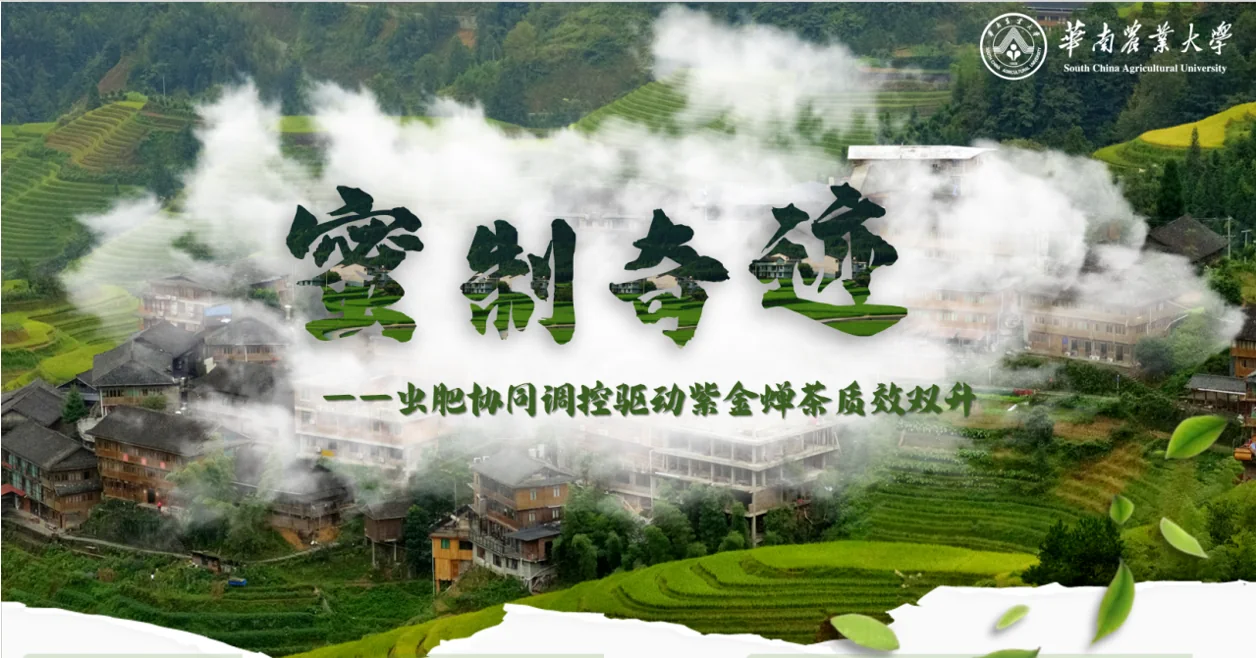
Overview
The project examines nutrient management, livestock and tea-farm waste use, carbon emissions, and variation in honey-like aroma in the Zijin cicada-tea industry. It proposes a circular technical plan combining waste co-composting, intelligent pest monitoring, and pest-informed fertilization. The 2025 entrepreneurship concept, 'A Honeyed Miracle,' was further developed into a 2026 social-practice report that brings organic-fertilizer development, pest data, spatial analysis, carbon accounting, and value assessment into one framework. The project was submitted to the 2026 Challenge Cup Guangdong College Students' Entrepreneurship Plan Competition and the 19th National College Students Energy Conservation and Emission Reduction Social Practice and Science and Technology Competition. Core methods
The technical plan proposes aerobic co-composting of livestock manure, tea-pruning residues, and tea waste. It also combines leafhopper color preference with YOLOv3 image recognition to design a pest-monitoring module whose observations can support differentiated fertilization. GIS is used for tea-field spatial analysis and yield prediction, while provincial greenhouse-gas guidance and IPCC methods underpin life-cycle estimates of waste management, soil carbon, and changes in economic value. Estimated results and value
The application estimates that a 30-mu pilot could use 108 tonnes of livestock waste and 30 tonnes of tea-field waste annually, reduce emissions by about 173.78 tonnes of CO₂ equivalent, and increase soil organic-carbon density by 0.875 tonnes of carbon per hectare per year. Waste management accounts for an estimated 96.3% of the emissions reduction. The economic model projects an 80%+ reduction in base-fertilizer purchasing costs, an additional 12–16 jin of yield per mu, and more than RMB 12,000 in annual added output value per mu. These are proposal-stage estimates that require continued field validation at larger scale. Project fieldwork
The team used site visits, interviews, and field observation to study Zijin cicada-tea cultivation and processing. |